
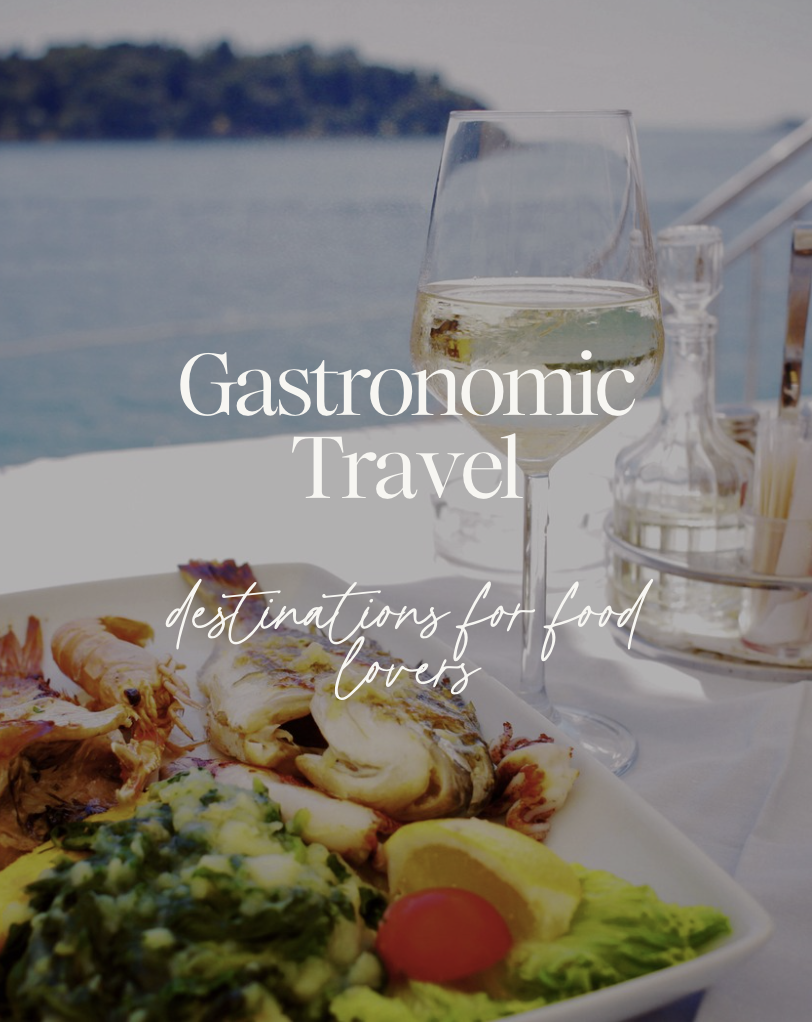
For many of our clients, food is not simply something that happens between sightseeing and hotel check-ins. It is one of the reasons they travel in the first place.
Nothing says more about a culture than what they eat. A great meal can tell you something about a place that a museum or monument simply cannot. It can introduce you to local traditions, seasonal ingredients, family recipes, winemakers, fishermen and producers. Sometimes, it can even become the memory you talk about most when you return home.
That is why gastronomic travel is such an important part of the journeys we create at Bella Vita Travels. Whether you want to build an entire trip around a particular cuisine or simply make sure the meals along the way are as memorable as the destinations themselves, we know where to look.
Every Bella Vita Travels client receives a detailed, personalized destination kit for each stop on their itinerary. These are full of our recommendations for what to see, do, eat and drink. We look beyond the obvious addresses to find the restaurants, local specialties and experiences that make a destination feel truly special.
In this month’s blog, we are sharing some of our top destinations for food lovers. This week, we start with three destinations we think deserve a place on any food lover’s itinerary.
The Basque Country, Spain
Pintxos, pristine seafood and the art of the grill
Few regions in Europe have embraced gastronomy quite like Spain’s Basque Country. San Sebastián has become legendary among food lovers, but the region’s culinary appeal extends far beyond its Michelin-starred dining rooms.
In San Sebastián, an evening of pintxos can mean moving from bar to bar, trying small plates alongside a glass of Txakoli or local cider. Along the coast, fishing remains central to the culinary identity. However, inland, the green landscape provides an abundance of exceptional produce.
For a particularly memorable food-focused stop, head to Getaria, a small fishing village on the Cantabrian coast. The specialty here is fish cooked simply over a wood-fired grill, with turbot being the star. It is a wonderful example of a philosophy found throughout the Basque Country. When your primary ingredients are so spectacular, the less done to them, the better.
For the formal experience, Elkano is one of the great names of Basque gastronomy. The Michelin-starred restaurant has built its reputation around fish and seafood cooked over the grill. We love the famous turbot and their philosophy centered on seasonality, traceability and the fishermen who supply the kitchen.
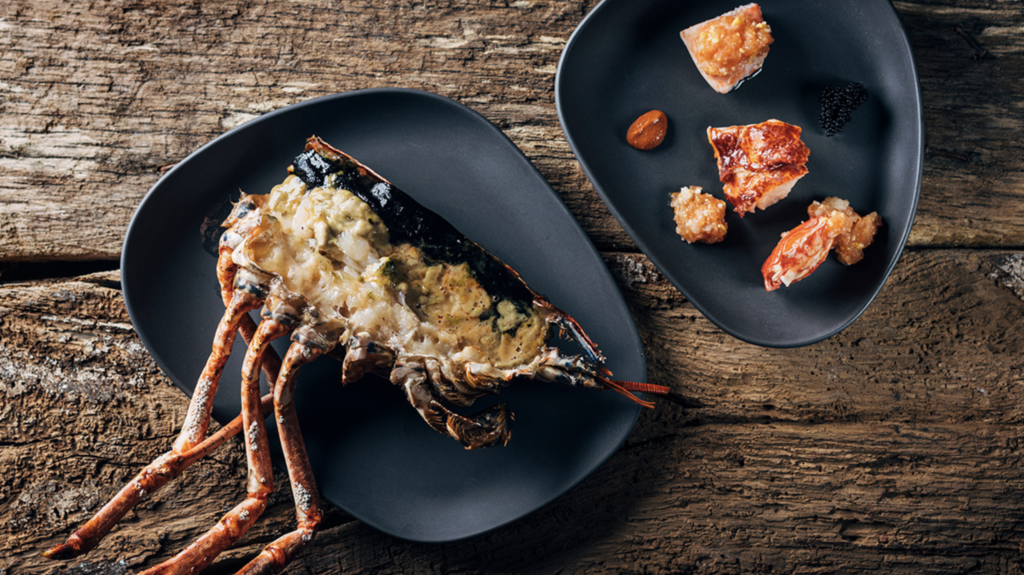
But gastronomic travel here should not be all tasting menus and white tablecloths. Some of the best experiences are found standing at a crowded pintxos bar, ordering whatever catches your eye and sharing plates with friends. In San Sebastián’s Old Town, Ganbara is one of the classic stops for exactly this kind of experience.
And that is the beauty of the Basque Country – you can spend one evening experiencing some of Europe’s most ambitious fine dining, and the next eating something wonderfully simple at a neighborhood bar.
Lyon, France
Where French culinary tradition still feels wonderfully alive
Paris may be France’s most famous culinary destination, but for travelers who are truly passionate about food, Lyon deserves serious consideration.
The city is one of France’s great gastronomic capitals and the birthplace of the bouchon lyonnais. Here, traditional restaurants with hearty, regional cooking take center stage. Lyon’s culinary history is also closely tied to the legendary Mères Lyonnaises, female chefs whose cooking helped establish the city’s reputation as a gastronomic destination.
A classic dish to look for is quenelle de brochet, a delicate pike dumpling traditionally served with a rich sauce. Other Lyonnaise specialties include saucisson brioché, pâté en croûte and tarte à la praline. This is traditional French cooking at its most generous. Dishes that are rich, comforting and deeply connected to the region.
For the grand experience, La Mère Brazier is an institution. Founded in 1921 by Eugénie Brazier, one of the most influential figures in French culinary history, the restaurant continues that legacy today under chef Mathieu Viannay. Its traditional cuisine, reinterpreted with local ingredients, has earned it two Michelin stars.
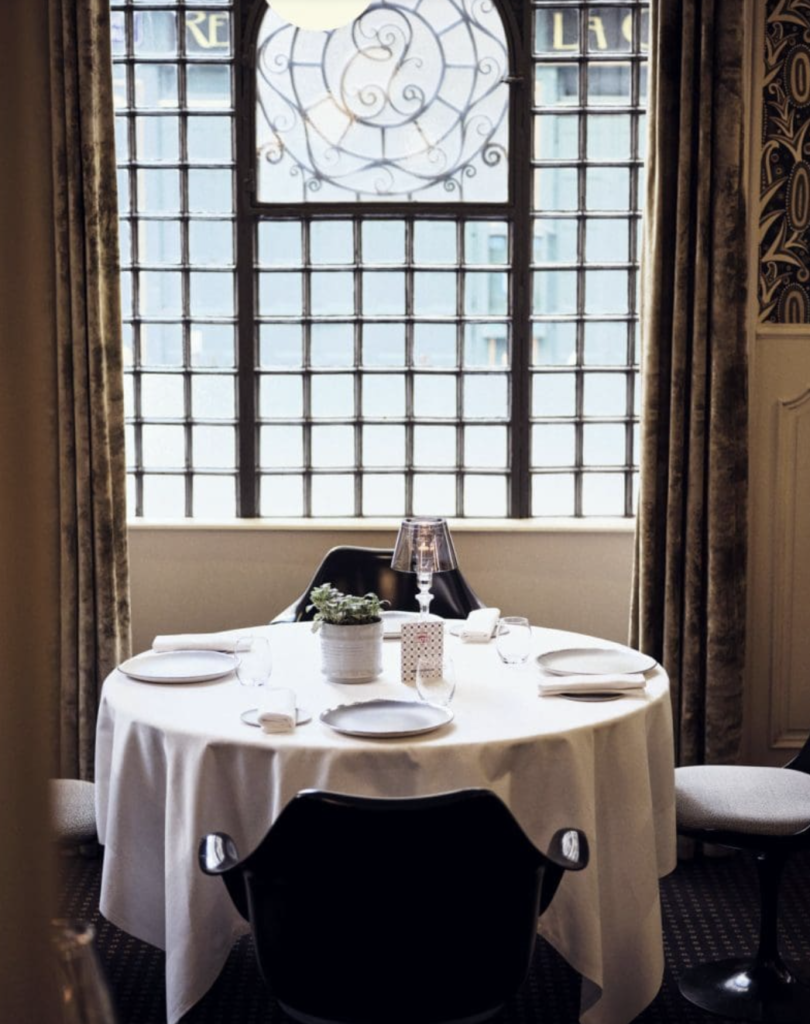
Then experience the other side of Lyon at a traditional bouchon. The pleasure here is less about ceremony and more about sitting down to generous regional cooking, a bottle of French wine and the convivial atmosphere that makes Lyon so appealing.
This contrast is precisely what makes the city such a rewarding destination for gastronomic travel. One meal can be an elegant Michelin experience; the next can be an unfussy plate of classic Lyonnaise cooking in a restaurant that feels like it has been part of the neighborhood forever.
Gastronomic travel in Istria, Croatia
Truffles, olive oil and the flavors of the Adriatic
Istria may not be the first place that comes to mind when you think of Europe’s great culinary destinations — and that is precisely why we love sending food-focused clients here.
This peninsula in northern Croatia sits at a fascinating culinary crossroads. Here Italian, Mediterranean and Central European influences meet. There are vineyards and olive groves inland, excellent seafood along the coast and, hidden beneath the forests, one of the region’s most prized ingredients: truffles.
For a true food lover’s stop, we recommend to spend time around Motovun and the surrounding countryside. The medieval hilltop town overlooks the Mirna Valley, one of Istria’s best-known truffle-producing areas. A private truffle-hunting experience followed by lunch featuring the day’s find is exactly the sort of experience that turns a beautiful destination into a memorable one.
And truffles are only part of the story. Istria is equally celebrated for its olive oil and wines, particularly Malvazija and Teran. Local seafood, handmade pasta, cured meats and seasonal vegetables all find their way onto the table.
For an exceptional fine-dining experience, Agli Amici Rovinj holds two Michelin stars. It places Istrian ingredients at the heart of its cuisine. In the 2026 Michelin selection, it retained its two stars and remains the only two-star restaurant in Croatia.
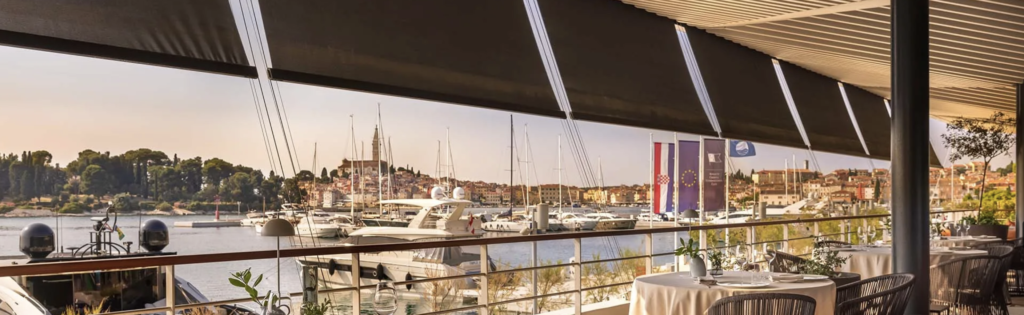
But again, we love to recommend balancing such elegant experiences with something much more rustic. Look for a traditional konoba, where the food is simpler and the emphasis is on local ingredients. You can also find most often handmade pasta, grilled fish and the kind of cooking that has been passed down through generations.
This is what makes Istria so compelling – a truffle lunch in the countryside, a glass of local wine overlooking the Adriatic and a sophisticated Michelin dinner can all belong to the same trip.
Let us plan your journey around the table
The best trips that focus on gastronomic travel are not simply a collection of restaurant reservations. They are about connecting the food to the place.
A morning at a local market might lead to a private cooking class. A scenic drive through wine country might end at a family-run winery. A day exploring a medieval village might culminate in dinner at one of the country’s great restaurants. And sometimes, the most memorable meal of the trip will be the simplest one — discovered because someone who knows the destination told you where to go.
That is where Bella Vita Travels comes in.
We bring together the hotels, experiences, guides, restaurants and local discoveries that make a journey feel personal. And with every itinerary, our detailed destination kits give you carefully selected recommendations for where to eat and drink, alongside everything else worth experiencing.
If food and wine are part of what inspires you to travel, let us build a journey around the table.
Your next great meal might just be the reason you remember the entire trip.


